

Arizona SMBs: Service Page Copywriting That Converts in 2–4 Weeks

Effective service page copy does two things: it makes your offer instantly clear, and it points every reader toward one measurable action. The fastest next step is to rewrite your headline around a single benefit and trim your page to one priority call to action, a method grounded in how people actually scan web pages and in plain-language research from B2B buyers. If you would rather hand this off, a specialized agency can scope a page for you.
TL;DR:
- Clear, benefit-driven headlines and a single call-to-action significantly increase conversion rates on service pages.
- Using plain language and short, declarative sentences makes pages more scannable and boosts reader engagement.
- The optimal page structure presents the core benefit first, followed by outcome-focused bullets, proof, and a concise CTA.
- Professional copy in Arizona costs between $2,500 and $6,500 per page, with project duration typically spanning two to four weeks.
- Testing one element at a time, such as headlines or CTA wording, helps identify what improves conversions without confusion.
Table of Contents
- What separates a high-converting service page from a weak one
- Service page anatomy: the order that gets results
- Writing techniques that turn browsers into leads
- Before-and-after copy swaps you can reuse today
- What a service page project costs and how long it takes in Arizona
- When DIY copy works and when hiring makes sense
- How WebTechs.Net helps Arizona businesses write pages that convert
- FAQ
- Sources
What separates a high-converting service page from a weak one
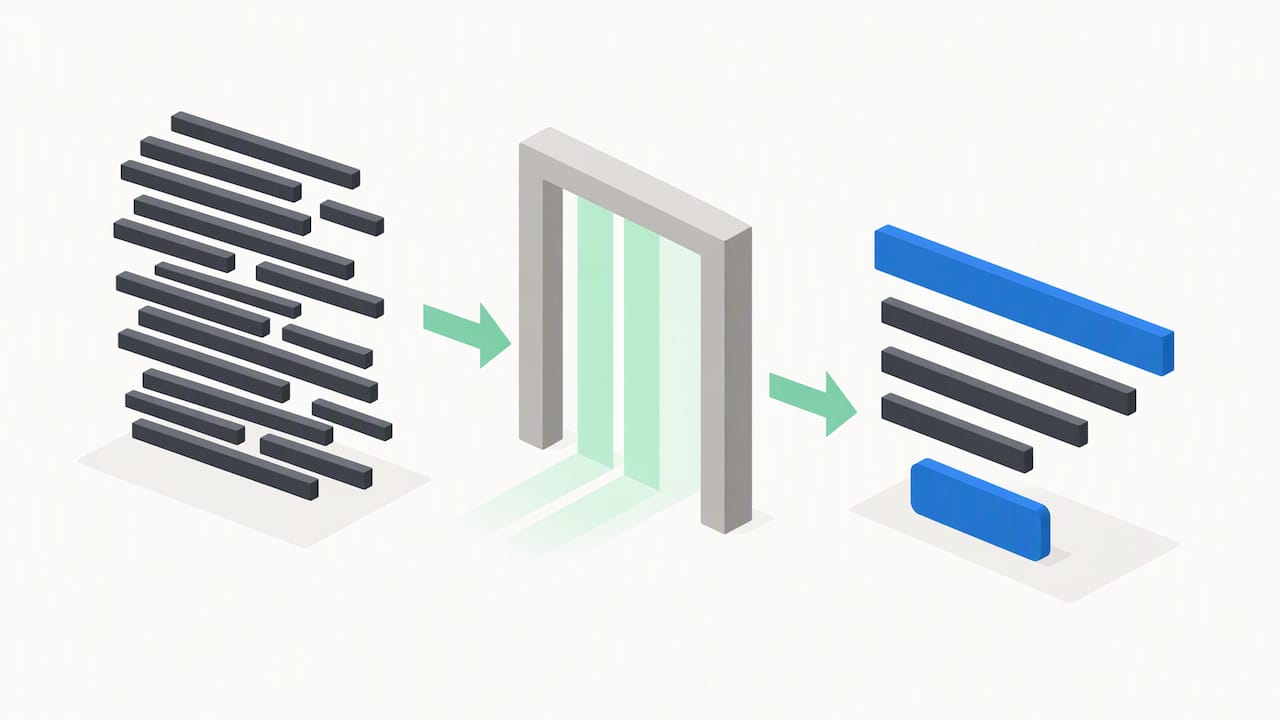
A strong service page is built to be scanned, not read top to bottom. Readers skip around looking for the parts that answer “can this business solve my problem,” so the page needs a clear hierarchy: headline, subheads, short bullets, and paragraphs that rarely run past two or three sentences.
Plain language matters as much as layout. Headlines that lead with a benefit, written in active voice and free of internal jargon, perform better than clever taglines or vague mission statements. A controlled study found that rewriting B2B copy in plain language raised reader intent to act from 4% to 73% in the group that saw the plain-language version. That is not a small lift. It is the difference between a page that gets ignored and one that gets a phone call.
Beyond layout and language, the page needs:
- One clear call to action, supported by short, honest microcopy under the button, not three competing buttons fighting for attention.
- Trust signals placed early, including a short case snippet, a testimonial line, or a specific result instead of generic praise.
- A benefit-first headline that names the outcome the visitor wants, not the service category you operate in.
- Short, declarative sentences that a skimming reader can absorb in a glance.
Concise, scannable, and objective writing measurably improved usability in controlled testing, combined changes to writing style raised overall usability by a large margin compared to typical marketing copy. That is the single biggest lever most SMB owners leave unused.
Service page anatomy: the order that gets results
Readers decide whether to stay on your page within the first few seconds, so the order of information matters as much as the words themselves. An inverted-pyramid structure puts the payoff first and the supporting detail after, which matches how people actually scan rather than read.
Follow this sequence:
- Headline stating the core benefit in plain terms.
- One-sentence value proposition that names who the service is for and what changes for them.
- Three benefit bullets, each tied to a real outcome, not a feature.
- Short proof, a testimonial line, a result, or a case reference.
- Primary call to action, a single button with one job.
- Secondary details or FAQ, pushed below the fold for readers who want more.
Microcopy carries more weight than most owners expect. A button that says “Get My Free Quote” outperforms a generic “Submit” because it restates the benefit at the moment of commitment. A privacy hint under a form (“We never share your information”) and a helper line on a phone field (“So we can text you updates”) both reduce the hesitation that causes form abandonment. These small lines work because they apply the same three principles: clarity, concision, and character, the three C’s that guide well-tested microcopy.
Anything that does not serve the primary decision, pricing tables, long FAQs, technical specifications, belongs on a linked subpage or a downloadable sheet. Keeping the main page lean protects the scan path you just built.
Pro Tip: If a sentence takes more than one breath to read aloud, it is probably too long for a service page.
Writing techniques that turn browsers into leads
Good service page copy follows a short set of rules you can apply today, no rewrite required.
Start with plain language. Cut sentences to under 20 words where possible, lead with the benefit before the feature, and avoid internal jargon your customer has never heard. Write at roughly an eighth-grade reading level for general consumer services; aim slightly higher only for specialized B2B or technical audiences who expect industry terms.
Headlines work best when they combine a benefit, an audience, and sometimes a timeframe: “Fast, Reliable Plumbing Repairs for Scottsdale Homeowners” tells a reader exactly what they get and who it is for. Calls to action follow a similar pattern: one verb plus one benefit, as in “Get Your Free Estimate” rather than “Learn More,” which commits to nothing.
A few practical moves:
- Replace passive constructions (“services are provided”) with active ones (“we handle it for you”).
- Put the strongest benefit in the first five words of the headline, since that is what scanning readers see first.
- Write button copy that restates the outcome, not the mechanics (“See My Price” instead of “Submit Form”).
- Keep microcopy honest. A false urgency line (“Only 2 spots left!”) erodes trust faster than it creates clicks.
Pro Tip: Run one change at a time. Swap only the headline, then only the call-to-action wording, then only the button color and its microcopy, so you know which change moved the needle.
Before-and-after copy swaps you can reuse today
Seeing the rewrite in context makes the rules concrete. Here are two common service page openings, rewritten using the techniques above.
A home services page that opened with “We are a full-service contracting company offering a variety of solutions for residential and commercial clients” becomes “Fast, Licensed Repairs for Arizona Homeowners, Usually Same-Day.” The rewrite names the audience, states a benefit, and adds a timeframe, all in fewer words.
A professional services page that read “Our team leverages decades of combined expertise to deliver results-driven solutions” becomes “25+ Years Helping Scottsdale Businesses Get Found on Google.” The second version is specific, measurable, and skips the filler entirely.
Three reusable headline and CTA pairings for typical SMB categories:
| Service type | Headline template | CTA template |
|---|---|---|
| Trade (plumbing, HVAC, electrical) | “[Service] in [City], Usually Same-Day” | “Get My Free Estimate” |
| Professional services (legal, accounting) | “[Outcome] Without the [Common Pain Point]” | “Schedule My Consultation” |
| Home services (landscaping, cleaning) | “[Result] for [Audience], Guaranteed Scheduling” | “Book My Free Visit” |
Each rewrite moves the benefit to the front, drops vague adjectives, and gives the reader a single next action. For more worked examples and full before-and-after pages, our website copywriting examples walk through the reasoning behind each change, and our portfolio shows how these pages look once they are live.
What a service page project costs and how long it takes in Arizona
Budgeting for a new service page depends on scope. Professional service page copy in Arizona typically runs from about $2,500 to $6,500 per page, with the range driven by how much research, keyword work, and revision rounds are included, a published local benchmark worth checking against any quote you receive, detailed on our Arizona copywriting rates page.
Three common engagement models cover most SMB needs:
- Fixed-price single page, best for a focused landing page tied to one offer.
- Bundled site copy, where several service pages are written together for consistency and a lower per-page rate.
- Ongoing retainer, suited to businesses that add new services or locations regularly and need fresh pages over time.
A typical timeline runs two to four weeks from kickoff to publish: discovery and research, a first draft, one or two revision rounds, then final implementation. The fastest way to shorten that window is a tight brief that names your buyer persona, your single conversion goal, three core benefits with proof points, and any compliance language the page must include.
When DIY copy works and when hiring makes sense
Writing your own service page works well when you have the time, a clear sense of your customer, and a willingness to test. Hiring makes more sense when deadlines are tight, the stakes are high (a rebrand, a paid campaign launch), or you need SEO and conversion expertise beyond writing alone.
Agencies add more than words: technical SEO structure, implementation on your actual site, and the ability to run structured A/B tests rather than guesswork. The trade-off is cost against time saved and risk reduced, not a question of which approach is “right.”
The best service page is not the most polished one. It is the one that answers your reader’s question fastest and asks for exactly one thing in return.
How WebTechs.Net helps Arizona businesses write pages that convert
We write and build service pages for small and mid-sized businesses across Arizona, combining content writing with the technical SEO and implementation work that gets a page found and ranked. We have worked with local businesses and service providers across the region, pairing plain-language copy with on-page SEO so the page performs in search and converts once a visitor lands on it.
Our SEO content writing services cover research, drafting, and revisions, and our portfolio shows finished service pages across several industries so you can see the approach before committing. If your current page is losing visitors before they ever reach your call to action, request a scoped estimate through Webtechs and we will tell you exactly what a rewrite involves and what it costs.
FAQ
What makes a service page convert better than a brochure-style page?
A converting page leads with a single benefit-driven headline and asks for one action, while a brochure-style page tries to describe everything at once. Scannable structure and plain language consistently outperform dense, feature-heavy copy.
How is a service page different from a blog post?
A service page is built to drive one conversion action for a reader who already has a specific need, while a blog post educates a broader audience earlier in their research. Service pages prioritize a clear offer and call to action over depth of explanation.
How much should I budget for professional service page copy in Arizona?
Professional service page copy in Arizona generally runs from about $2,500 to $6,500 per page, depending on research, SEO integration, and revision rounds, a range detailed on our copywriting rates page. Bundling multiple pages together often lowers the per-page cost.
What is the biggest mistake businesses make on service pages?
The most common mistake is burying the offer under generic praise or multiple competing calls to action instead of one clear next step. A close second is writing in internal jargon that makes sense internally but means nothing to a first-time visitor.
Should I test more than one headline on my service page?
Yes, testing one headline variable at a time, such as swapping the benefit statement while keeping layout and CTA constant, shows which specific change moved conversions. Running several changes at once makes it impossible to know what worked.
Sources
- Concise, scannable, and objective: how to write for the web – NN/g
- New study reveals clear writing tips for B2B marketers – Content Marketing Institute