

5 Step SERP Playbook: Search Intent SEO for Scottsdale Marketers
Search intent is the purpose behind a search query, what the person actually wants to accomplish, and the fastest way to act on it is to check the live SERP and match your content’s type, format, and angle to what already ranks. This guide walks through the three Cs, a five-step SERP workflow, a Scottsdale-specific checklist, and what it costs to get help if you want it done for you.
TL;DR:
- Most search intent signals are revealed by analyzing the current SERP, as rankings and content types frequently change, especially for commercial queries.
- Matching content type, format, and angle to live SERP data increases the chances of ranking higher and satisfying the actual user purpose.
- The five-step workflow, including result type capture and headline inspection, takes 10 to 20 minutes and helps create a precise content brief before drafting.
- Local intent pages should use specific wording like “near me” for immediate action and align with Google Business Profile language to improve relevance.
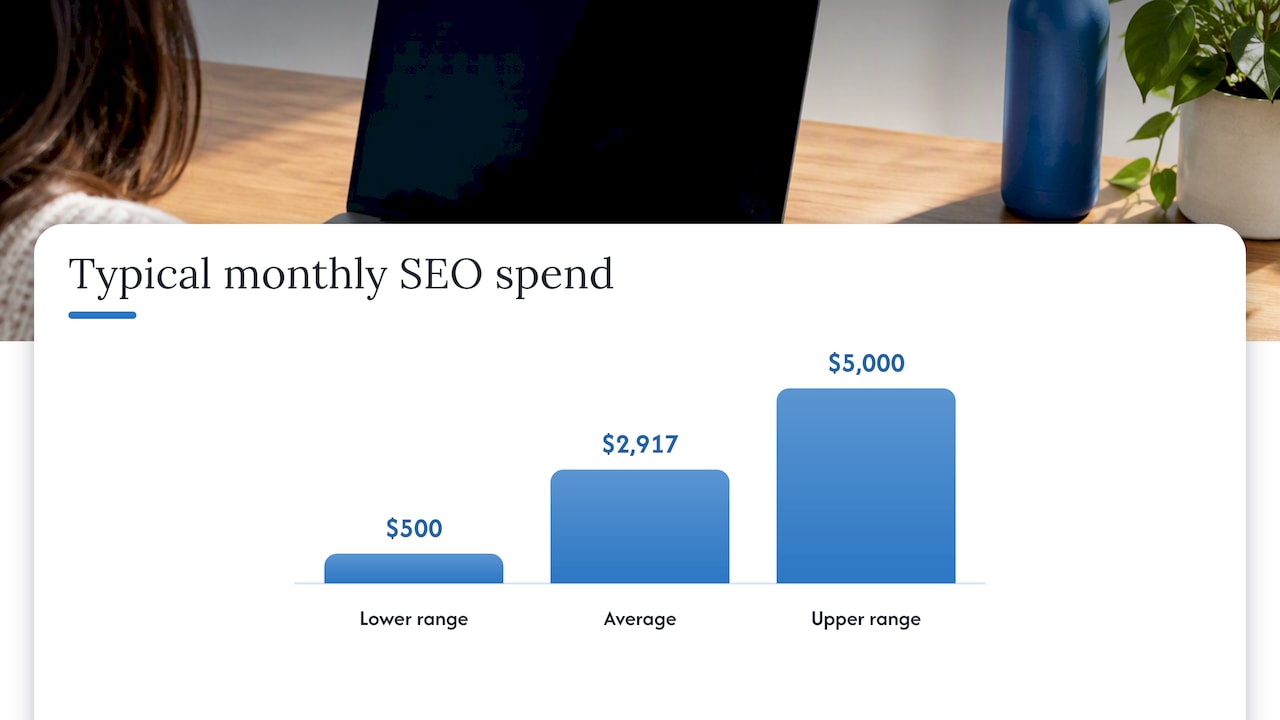
- Average US SEO costs range from $500 to $5,000 monthly, with most businesses spending around $2,917, influencing whether to handle pages in-house or outsource.
Table of Contents
- What search intent is and why it matters for SEO
- The three Cs: content type, format, and angle
- A 5-step SERP-driven workflow to detect intent before you write
- Scottsdale-local checklist and content examples
- WebTechs.Net experience and local case evidence
- What most advice on search intent gets wrong
- How we help Scottsdale businesses act on search intent
- FAQ
- Sources
What search intent is and why it matters for SEO
Search intent is usually sorted into four buckets: informational, navigational, commercial, and transactional. Those labels are useful shorthand, but treat them as a purpose test instead of a checklist: ask what the searcher is trying to accomplish right now, not just which category the query technically falls under. Someone typing “search intent seo” wants a working explanation and a way to apply it today, not a dictionary entry.
Matching that purpose affects ranking indirectly. Google’s own guidance on people-first content ties content quality to whether it actually helps the reader rather than manipulates rankings, and that framing lines up with how Experience, Expertise, Authoritativeness, and Trust get evaluated. Pages that satisfy intent tend to hold attention and earn clicks; pages that miss it get abandoned fast, regardless of how well they target the keyword.
Common failure modes include:
- Keyword-first writing: optimizing for a phrase without checking what result type currently ranks for it.
- Mixed-intent confusion: treating a query as purely informational when the SERP actually shows commercial comparison content.
- Format mismatch: publishing a long-form guide where the top results are quick list-style answers.
A fast check: open the SERP, scan the first five results, and ask whether your draft matches their shape.
The three Cs: content type, format, and angle
The three Cs, a framework described by Ahrefs, break a keyword down into three decisions: what kind of page to build, how to structure it, and what perspective to take. Used together, they turn a vague keyword into a workable content brief in minutes.
- Content type: decide whether the query wants a blog post, a landing page, or a product page. “Search intent seo” wants an educational blog post; “Scottsdale SEO agency” wants a service landing page.
- Format: decide whether the dominant results are how-to guides, listicles, comparisons, or tools. A query full of numbered-list results rarely rewards a single long narrative page.
- Angle: decide who you’re writing for and what benefit or timeframe matters to them. “Search intent SEO for small business owners” needs a different angle than “search intent SEO for enterprise teams.”
Two quick examples: “search intent seo checklist” signals a practical, scannable format, so a numbered checklist outperforms a theory-heavy essay. “search intent seo examples” signals a request for applied illustrations, so pairing each definition with a real query and a matching result type beats abstract explanation. The three Cs work because they force you to look at the SERP before you write a word, not after.
A 5-step SERP-driven workflow to detect intent before you write
This takes 10 to 20 minutes and produces a usable content brief, not just notes.
- Step 1: Capture result types. Scan the top 10 results and tally how many are blog posts, product pages, tools, videos, or local packs. Patterns here reveal the dominant content type fast.
- Step 2: Inspect headline language. Words like “best,” “how to,” “guide,” or “vs.” in titles and meta descriptions reveal the expected angle and format.
- Step 3: Check volatility and related queries. If the “People also ask” box and related searches pull in several different intents, the keyword is mixed and may need two separate pages instead of one.
- Step 4: Write the brief. Lock in type, format, and angle, then write a one-sentence BLUF (the answer the page will lead with) before drafting anything else.
- Step 5: Run pre-publish technical checks. Confirm the page is indexable, add relevant structured data, and test the mobile rendering before it goes live.
Pro Tip: Save a screenshot of the SERP the day you research it. Rankings shift, and that snapshot explains why you chose the format you did.
Scottsdale-local checklist and content examples
Local intent reads differently than generic intent. “SEO company near me” signals someone ready to call today; “Scottsdale SEO services” signals someone comparing options first. Build separate pages for those two patterns instead of merging them into one generic services page.
- Match wording to intent. Use “near me” phrasing on pages built for immediate action, and reserve city-name phrasing (“Scottsdale SEO”) for comparison-stage pages.
- Align your Google Business Profile. Service categories, posts, and Q&A on your profile should echo the same language as your highest-intent landing pages; a mismatch confuses both searchers and Google.
- Draft two example outlines. A “near me” page leads with service area, phone number, and a short trust signal. A comparison page leads with a benefit-driven headline like “What Scottsdale Businesses Should Expect From a Local SEO Engagement” followed by a breakdown of services and pricing ranges.
On the cost side, GoodFirms’ 2026 pricing research puts the average monthly SEO spend in the US at roughly $2,917, with most businesses paying between $500 and $5,000 a month. That range matters when you’re deciding whether to build these pages yourself or bring in help.
Track results with simple KPIs: click-through rate on the SERP, phone calls attributed to the page, and contact form submissions. Running an A/B test between a “near me” headline and a city-name headline on similar traffic volume is a quick way to see which wording your local searchers respond to.
WebTechs.Net experience and local case evidence
We build intent-led SEO programs combining content strategy, Google Business Profile work, and local landing page structure into a single plan rather than treating them as separate projects.
- We match content type and format to live SERP data before drafting a brief, the same workflow outlined above.
- We align Google Business Profile categories and posts with the wording used on local landing pages.
- Our garage door repair case study documents a 1,620% increase in performance, driven largely by rebuilding service pages around the intent signals the SERP actually showed rather than guesswork.
- Client feedback often highlights faster turnaround and clearer reporting as factors influencing continued engagement.
What most advice on search intent gets wrong
Most search intent advice treats the four-bucket model (informational, navigational, commercial, transactional) as the whole job. It isn’t. The bucket tells you almost nothing about format or angle, and plenty of pages fail while nailing the “correct” bucket.
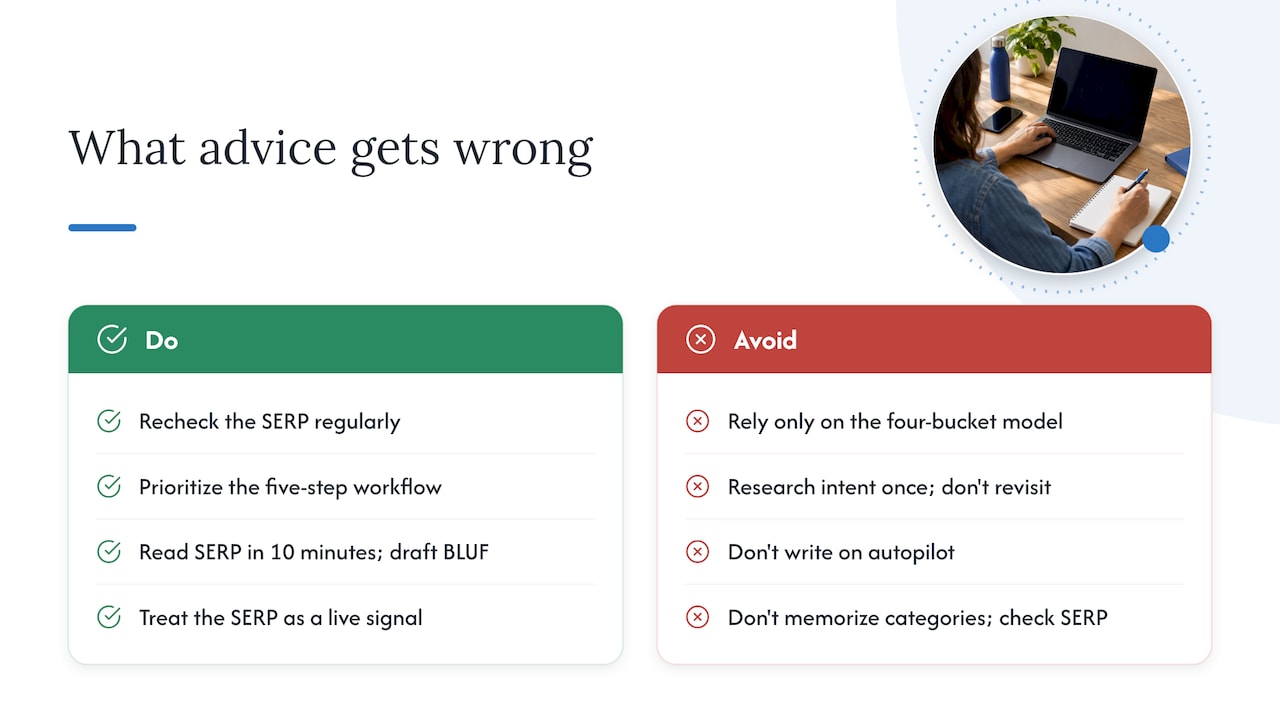
The bigger issue is that teams research intent once and then write on autopilot, as if a SERP snapshot from six months ago still holds. SERPs shift, especially for commercial queries where new comparison content or a local pack can appear overnight. The checklist in this guide works because it treats the SERP as a live signal you recheck, not a one-time research step you file away.
If you take one thing from this, prioritize the five-step workflow over memorizing intent categories. A marketer who can read a SERP in ten minutes and write an honest BLUF will outperform one who can recite intent definitions but never checks what’s actually ranking today.
— Brett
How we help Scottsdale businesses act on search intent
If mapping the three Cs and rebuilding pages around live SERP data sounds like more than your team has time for, that’s exactly the gap we close for Scottsdale businesses.
- We build Scottsdale SEO programs around the same intent workflow covered here, from keyword research through page structure.
- We write and structure content so it matches the dominant format and angle on the SERP, not just the target keyword.
- We optimize Google Business Profiles alongside landing pages so local signals and page content tell the same story.
A free consultation covers a review of your current pages against live SERP data and a straight answer on what a realistic timeline looks like for your market. Visit our Scottsdale SEO services page to get started or request a quote.
FAQ
Is SEO dead now with AI?
No. Google’s own guidance on generative AI search features states that foundational SEO practices, including crawlability, structured data, and people-first content, remain essential for visibility in AI-driven search experiences. SEO has changed shape, but the underlying work of matching content to intent still determines what gets surfaced.
What are the three C’s of search intent?
The three Cs are content type, content format, and content angle, a framework described by Ahrefs for matching a keyword to the right kind of page. Type sets whether you build a blog post or landing page, format sets the structure, and angle sets the audience and benefit framing.
What is the 80/20 rule in SEO?
There’s no single official definition tied to search intent specifically; in general SEO use, it typically refers to the idea that a small share of pages, keywords, or fixes drive most of a site’s traffic or ranking gains. Applied to intent work, it means prioritizing the handful of high-intent pages that most directly match commercial or transactional searches before polishing lower-impact content.
How much does it cost to hire an SEO agency?
US businesses spend an average of roughly $2,917 per month on SEO, with most falling between $500 and $5,000 monthly according to GoodFirms’ 2026 research. Small-business retainers commonly fall within a mid-range budget, though exact pricing depends on scope and market.
Sources
- Creating helpful, reliable, people-first content | Google Search Central
- Search intent: How to find and optimize for it | Ahrefs
- SEO pricing in USA 2026: What agencies, freelancers, charge? | GoodFirms